Lawn Fungus Treatment: A Guide for Michigan Homeowners
Michigan lawns face a fungal disease threat that surprises many homeowners — especially in July and August when conditions turn warm, humid, and wet. Lawn fungus can take hold quickly, damaging turf that looked healthy just weeks before. Back to Nature works with Michigan homeowners across the state to identify, treat, and prevent fungal disease before it causes serious long-term damage.
Why Michigan Lawns Are Susceptible to Fungus
The combination of Michigan’s warm summer days, cool nights, heavy dew, and clay-heavy soils in many parts of the Lower Peninsula creates prime conditions for fungal disease. Cool-season grasses — the standard across Michigan lawns — can become stressed during summer heat, and that stress makes them more vulnerable to infection. Overwatering, poor drainage, and excessive thatch compound the problem.
Common Lawn Fungal Diseases in Michigan
Several fungal diseases show up regularly in Michigan:
- Brown patch (Rhizoctonia) — circular brown patches with a darker outer ring; most active in July and August during humid nights
- Dollar spot — small, silver-dollar-sized tan spots that can merge into larger affected areas; common in under-fertilized lawns
- Red thread — pinkish-red threads visible on grass blades in cool, wet spring and fall weather
- Powdery mildew — white powdery coating on grass blades; common in shaded areas with poor air circulation
- Necrotic ring spot — circular dead patches often surrounded by a ring of darker grass; associated with Kentucky bluegrass
Identifying Lawn Fungus vs. Other Problems
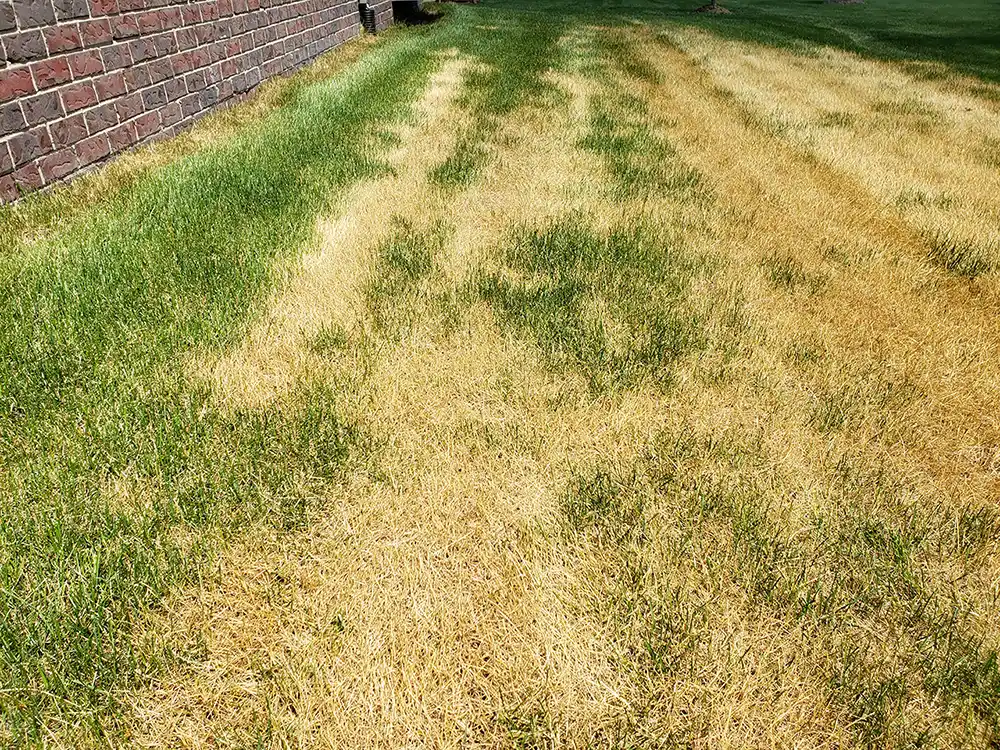
Fungal damage is commonly mistaken for drought stress, pet damage, or grub activity. Key signs that point to fungal disease: the affected area has a distinct shape (circular or ring-like), you can see discoloration or lesions on individual blades under close inspection, the problem appeared or worsened after wet weather, and the damage doesn’t respond to watering. If in doubt, a professional assessment can confirm the cause before you invest in treatment.
How to Treat Lawn Fungus
Active fungal disease in a Michigan lawn can be managed with fungicide applications. The key principles:
- Identify the disease correctly before selecting a product — different fungi respond to different active ingredients
- Preventative fungicide applications during high-risk periods are more effective than reactive treatment after the disease has spread
- Common active ingredients include azoxystrobin, myclobutanil, and propiconazole; product rotation helps prevent resistance
- Multiple applications are typically needed; a single treatment rarely provides season-long control
Cultural Practices That Reduce Fungal Risk
Fungicide alone isn’t enough — the conditions that favor disease need to be addressed:
- Water deeply in the early morning so grass dries completely during the day
- Avoid evening watering, which keeps foliage wet overnight
- Dethatch if the thatch layer exceeds half an inch — thick thatch traps moisture
- Improve drainage in low-lying areas where water collects
- Mow at the proper height and keep blades sharp — torn grass blades invite infection
Recovery and Renovation
Severely damaged areas may need overseeding after fungal activity subsides. Fall — September through early October in Michigan — is the ideal renovation window for cool-season lawns. Improved turfgrass varieties with better disease resistance are worth considering when reseeding affected areas.
Back to Nature: Michigan Lawn Disease Experts
Fungal disease requires fast action and the right treatment. Back to Nature’s lawn care programs include disease monitoring and preventative fungicide applications tailored to Michigan’s summer weather patterns. Contact Back to Nature today and let’s protect your lawn before the next humid stretch rolls through.