Best Time to Aerate Your Lawn in Michigan
Aeration is one of the most impactful services you can give your lawn — but its effectiveness depends almost entirely on timing. Aerate at the right time and you relieve compaction, improve drainage, and set your lawn up for thicker, healthier growth. Aerate at the wrong time and you stress the grass during a period when it cannot recover.
Knowing the best time to aerate your lawn in Michigan starts with understanding your grass type and your region. Most Michigan lawns are planted with cool-season grasses, and the state’s humid continental climate creates a specific seasonal window that produces the best results. This guide covers ideal aeration timing, the signs your lawn is ready, what to expect from the process, and how to pair aeration with overseeding for maximum impact.
What Is Lawn Aeration and Why Does It Matter?
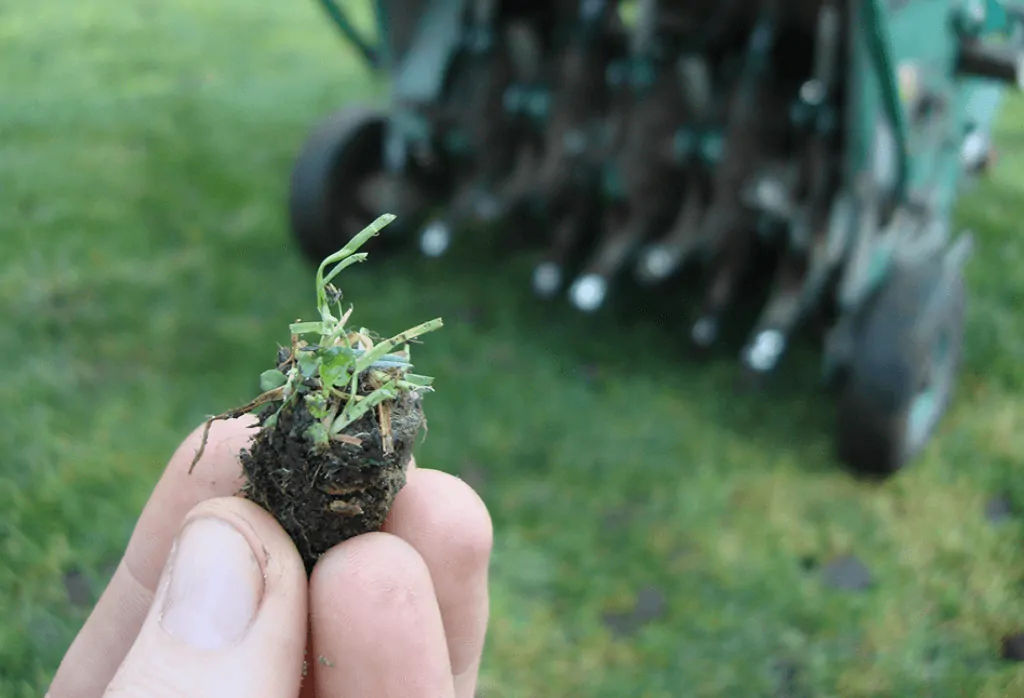
Core aeration is the process of mechanically removing small plugs of soil from the lawn — typically two to three inches deep. A professional core aerator pulls these plugs at regular intervals across the entire lawn surface, creating thousands of small channels that serve three critical functions.
First, aeration relieves soil compaction. Foot traffic, mowing, heavy rain, and natural soil settling compress the soil structure over time, squeezing out the air spaces that roots need to grow. Compacted soil restricts root depth, reduces water infiltration, and limits the movement of oxygen and nutrients through the root zone.
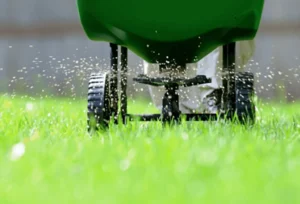
Second, aeration improves water and nutrient penetration. Compacted soil causes water to pool on the surface or run off rather than soaking into the root zone. After aeration, water, fertilizer, and soil amendments move directly through the plug holes into the soil profile where they can reach roots more efficiently.
Third, aeration reduces thatch buildup. According to Michigan State University Extension, core aeration improves oxygen flow to the soil and stimulates the microbial activity that decomposes thatch naturally. The soil cores left on the surface after aeration also introduce thatch-decomposing microbes directly into the thatch layer. MSU Extension’s full guidance on core aeration and dethatching is available at canr.msu.edu.
The Best Time to Aerate a Lawn in Michigan
The best time to aerate your lawn in Michigan is late summer through early fall — specifically between mid-August and mid-October. Michigan State University Extension identifies fall as the preferred aeration window because turfgrass is not under heat stress at this time of year and has favorable growing conditions for recovery.
Michigan lawns are predominantly cool-season grasses — Kentucky bluegrass, perennial ryegrass, tall fescue, and fine fescue — that grow most actively in spring and fall when days are warm and nights are cool. Aerating during this fall growth period means the lawn fills in aeration holes quickly while immediately benefiting from improved soil conditions. Grass roots continue developing even as temperatures drop, pushing deeper into the loosened soil before the ground freezes.
For most of Southeast Michigan — including the Monroe, Wayne, Washtenaw, and Livingston County areas served by Back to Nature — the ideal aeration window falls between late August and mid-October. The sweet spot is September, when soil temperatures remain above 55°F for seed germination, crabgrass and other summer annual weeds have completed their life cycle, and the lawn still has enough growing time to recover before dormancy.
Michigan aeration timing by region:
- Southern Michigan (Monroe, Lenawee, Jackson Counties) — Mid-August through mid-October
- Southeast Michigan (Wayne, Washtenaw, Livingston Counties) — Late August through mid-October
- Central Michigan — Late August through early October
- Northern Michigan — Mid-August through late September
Soil temperature is a more reliable trigger than calendar date. MSU Extension recommends monitoring local soil temperatures rather than relying on fixed dates, as Michigan’s growing conditions can vary by two weeks or more depending on the region and annual weather patterns.
Why Fall Is Better Than Spring for Michigan Aeration
Spring aeration is not recommended as the primary aeration window for Michigan lawns, and it is worth understanding why.
Aerating in spring coincides with the pre-emergent herbicide application window for crabgrass prevention. If you aerate after applying pre-emergent, you break the chemical barrier in the soil, allowing crabgrass seeds to germinate through the holes. If you aerate before applying pre-emergent, you lose some of the timing advantage for both treatments.
Spring aeration also limits your overseeding options. Pre-emergent herbicides prevent all seeds from germinating — including the desirable grass seed you would want to apply after aeration. Pairing spring aeration with overseeding means skipping pre-emergent entirely, which invites crabgrass pressure all season.
Fall aeration avoids both of these conflicts. Summer annual weeds like crabgrass have already completed their lifecycle by September, so aeration holes do not invite weed pressure. Fall is also the optimal seeding window for Michigan cool-season grasses — MSU Extension identifies August 15 to September 15 as the best period to seed lawns in Michigan — making fall aeration and overseeding a natural and highly effective combination.
Signs Your Michigan Lawn Needs Aeration
Some Michigan lawns benefit from annual aeration, while others can go two to three years between treatments. These signs indicate your lawn is ready for aeration sooner rather than later.
The screwdriver test: Push a standard screwdriver into moist soil. If it meets significant resistance in the top three inches, your soil is compacted. In healthy, uncompacted soil, a screwdriver slides in easily to a depth of four to six inches.
Water pooling or runoff: If water sits on the surface after rain or irrigation rather than soaking in within a few minutes, compaction is restricting infiltration. This is a particularly common sign in Southeast Michigan lawns on clay-heavy soils.
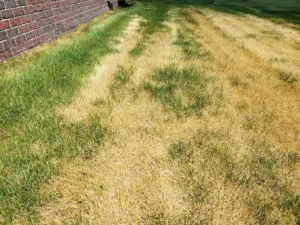
Thin grass despite regular care: If you are fertilizing, watering, and mowing correctly but the lawn remains thin and lackluster, compacted soil may be restricting root development. Shallow roots limit the plant’s access to water and nutrients, producing weak top growth regardless of how much product you apply.
Clay or compacted soil: Much of Southeast Michigan — including areas throughout Monroe, Wayne, and Washtenaw Counties — sits on clay-heavy subsoil that compacts readily under normal traffic and equipment use. Michigan State University Extension specifically recommends core aeration for high clay content soils to help loosen the soil and facilitate better drainage and rooting. If your lawn is on clay, annual aeration is the standard recommendation.
Heavy thatch buildup: Push your finger through the grass canopy and feel for a spongy brown layer between the green blades and the soil surface. If that layer exceeds half an inch, thatch is accumulating faster than it is breaking down, and aeration will help restore the balance.
High-traffic areas: Lawns with regular foot traffic from kids, pets, or outdoor entertaining compact faster than low-traffic areas. Worn paths, thin strips along walkways, and hard-packed play areas all benefit from annual aeration.
Aeration and Overseeding: The Best Fall Combination for Michigan Lawns
Aerating immediately before overseeding is the single most effective lawn restoration treatment available for Michigan cool-season turf. The aeration holes provide direct seed-to-soil contact at the ideal depth, producing germination rates significantly higher than surface seeding alone.
Back to Nature provides professional aeration and seeding as a combined service, timed to Michigan’s fall window for maximum results. The aeration creates the seed channels; the overseeding fills in thin, bare, and worn areas; and the fall timing gives new plants enough time to establish functional root systems before winter dormancy.
Recommended seeding rates for Michigan cool-season grasses:
Kentucky bluegrass — 3 to 4 pounds per 1,000 square feet for overseeding Tall fescue — 5 to 7 pounds per 1,000 square feet for thin or heavily worn areas Perennial ryegrass — 5 to 8 pounds per 1,000 square feet for quick establishment
Under-seeding produces thin, patchy results. Over-seeding wastes product and can create competition among seedlings that reduces overall germination. Professional application ensures seed is matched to your specific grass type and applied at the correct rate for your lawn’s condition.
For Michigan lawns, MSU Extension recommends late summer and early fall as the best time to establish new turf from seed. Their full lawn establishment guidelines are available at canr.msu.edu/resources/establishing_a_new_lawn_using_seed_e2910.
What to Expect After Professional Aeration
After aeration, your lawn will be covered with small soil cylinders that look untidy for a few days. Do not rake them up. These plugs break down naturally within two to three weeks, returning organic matter to the soil surface and introducing beneficial microorganisms into the thatch layer. After one to two mowings, the plugs will have crumbled and dispersed back into the lawn.
If overseeding was performed at the same time, consistent moisture management in the two to three weeks following service is critical. New seedlings need the top inch of soil to stay moist, which typically requires light watering twice daily — morning and early afternoon — for 14 to 21 days. Once seedlings have reached one to one and a half inches in height, transition to deeper, less frequent irrigation to encourage root development.
Kentucky bluegrass germinates in 14 to 21 days. Tall fescue and perennial ryegrass germinate in 10 to 14 days. By the time your Michigan lawn goes dormant in November, new plants will have established functional root systems. The full improvement in lawn density becomes most visible the following spring, when new plants emerge from dormancy already established.
Professional Lawn Aeration and Seeding in Southeast Michigan
Timing aeration correctly for a Michigan lawn requires knowing your grass type, soil composition, and local soil temperature trends — all of which vary across Southeast Michigan. A professional lawn care provider ensures aeration is performed at the optimal point in your lawn’s growth cycle using commercial-grade equipment that pulls deeper plugs than consumer rental machines.
Back to Nature provides professional lawn aeration and seeding services across Southeast Michigan, including Monroe, Wayne, Washtenaw, Livingston, Lenawee, and Jackson Counties. Our treatments are timed to Michigan’s fall window and coordinated with overseeding and fertilization for maximum results.
Contact Back to Nature today to schedule your fall aeration and seeding before the September window fills up.
Milan: (734) 973-5800 Downriver: (734) 479-5755
Frequently Asked Questions About Lawn Aeration in Michigan
When is the best time to aerate a lawn in Michigan?
The best time to aerate a lawn in Michigan is late summer through early fall, between mid-August and mid-October. September is the optimal month for most Michigan cool-season lawns, as soil temperatures remain warm enough for grass recovery and overseeding while summer heat stress has passed and crabgrass is no longer a germination threat.
How often should I aerate my lawn in Michigan?
Most Michigan lawns benefit from annual aeration, particularly those on the clay-heavy soils common throughout Southeast Michigan. Clay soil compacts more readily and holds compaction longer than sandy or loamy soils, making yearly treatment the standard recommendation for lawns in Monroe, Wayne, Washtenaw, and surrounding counties. Lawns with lighter soil and low foot traffic can typically go two to three years between treatments.
Should I aerate before or after overseeding in Michigan?
Aerate first, then overseed immediately after. The aeration holes provide direct seed-to-soil contact at the ideal depth, significantly improving germination rates compared to surface seeding alone. For Michigan cool-season lawns, combining aeration and overseeding in a single fall visit is the most effective approach for thickening a thin or patchy lawn.
Should I aerate before or after fertilizing?
Aerate before fertilizing. The open aeration holes allow fertilizer to penetrate directly into the root zone rather than sitting on a compacted surface. For Back to Nature customers on a full lawn program, fall aeration and fertilization are coordinated as part of the same seasonal service for maximum combined benefit.
Can I aerate in spring instead of fall in Michigan?
Spring aeration is generally not recommended as the primary window for Michigan cool-season lawns. Aerating in spring conflicts with pre-emergent herbicide timing for crabgrass prevention and creates a conflict with overseeding, since pre-emergent also prevents desirable grass seed from germinating. Fall aeration avoids both of these issues and aligns with the peak growth period for Michigan cool-season grasses.
Does Back to Nature offer aeration and seeding in Southeast Michigan?
Yes — Back to Nature provides professional aeration and seeding services across Southeast Michigan, serving Monroe, Wayne, Washtenaw, Livingston, Lenawee, and Jackson Counties from our Milan and Downriver locations. We have been serving Michigan lawns with eco-friendly, results-driven lawn care programs and use only high-quality seed matched to Michigan’s cool-season grass conditions. Contact us at to schedule your lawn aeration before the seasonal window closes.